Guides
Local SEO checklist for wrap and tint shops: a closer look
Use this wrap and tint shop local SEO checklist for Google Business Profile, citations, service pages, photos, reviews, and accurate tint-law information.
What to take away
- Complete Google Business Profile and other free listings before spending anything on advertising.
- Photographs of edges and recesses do more here than keyword work does.
- Never describe a tint darkness as legal without checking the law where the vehicle is registered.
- Ask customers for Google reviews consistently, follow each platform's review rules, and do not condition incentives on a positive review.
- Service pages should answer the question the customer actually typed, which is usually about their own vehicle.
Use this wrap and tint shop local SEO checklist once, then revisit it quarterly. Most of the setup is a single afternoon.
Google Business Profile
- Business name exactly as it appears on your signage and paperwork, with no added keywords
- Category set to the closest available Google Business Profile category for the shop's main service, such as vehicle wrapping or window tinting, with other accurate available categories for the services the shop actually offers
- Address and service area accurate, and consistent with every other listing you have
- Opening hours correct, including the hours you actually answer the phone
- Phone number that a person answers during those hours
- A short description that names the services and says nothing about legality of film darkness
- Services listed individually rather than as one entry
- Photographs added and refreshed, not left at whatever was uploaded when the listing was created
Google Business Profile Help's “Tips to improve your local ranking on Google” explains that local results are based on relevance, distance, and prominence. A complete, accurate profile is one part of the listing you control.
Business profile essentials
- Name exactly as on signage
- Category set to actual work
- Address and service area accurate
- Opening hours correct
- Phone answered during hours
- Services listed individually
- Photographs added and refreshed
Consistency across the web
- Name, address, and phone identical everywhere they appear
- Old listings from a previous address found and corrected or removed
- Any listing created by a supplier or a directory claimed and made accurate
- Claim and update the shop's listings on Bing Places for Business, Apple Business Connect (for Apple Maps), Yelp, and its Facebook Page
- Where eligible, check the shop's listing on the Better Business Bureau and Yellow Pages; also look for the local Chamber of Commerce directory
- Social profiles carrying the same details and the same hours
- The website showing the same address and phone in text, not only inside an image
Photographs
- Every completed vehicle shot from the same positions in the same light
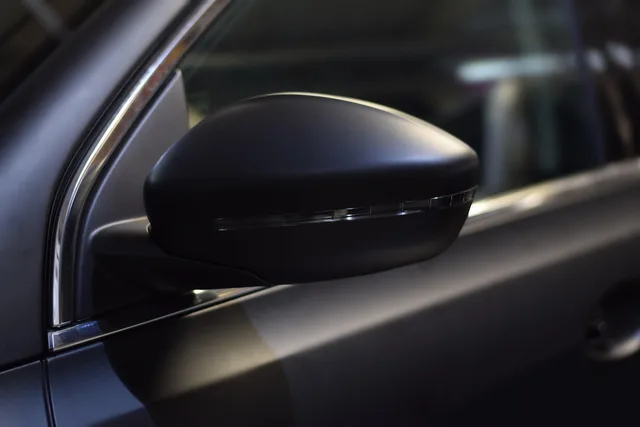
- Close images of the parts customers worry aboutrecessed handles, mirror bases, bumper edges, the top edge of glass
- The bay itself, clean and lit, because customers judge the environment as much as the finished vehicle, and the standard for that is set out in the equipment and setup guide
- Written permission from the customer to use images of their vehicle
- No plates, no addresses, nothing identifying the owner
- Nothing published that you would not stand behind if a stranger inspected it
Pages on your own site
- A page per service family rather than one page listing everything
- Each page states scope in physical termswhich panels or windows, jambs, hardware
- Each page states what is excluded and what a customer will see, including known material limits such as a light gap at a dot matrix band
- A page explaining removal as its own service, because customers search for it separately
- Aftercare information published, matching what film manufacturers specify
- Warranties explained separatelythe film maker's on the material, yours on the workmanship
- Add accurate AutomotiveBusiness or LocalBusiness JSON-LD structured data to the location page, matching the shop details customers can see on the site
- A clear next step on every page, with a time attached
Claims to keep off every page and listing
- No tint darkness described as legal without checking the tint statute for the state where the vehicle is registered. Verify it with the state's official Department of Motor Vehicles (DMV) or state police guidance, and name the applicable statute and agency on the page
- No durability claim the film manufacturer does not publish
- No warranty wording that blurs the material warranty into your workmanship warranty
- No comparison with a named competitor that you cannot support
Everything on a listing is advertising; claims must be truthful and substantiated.
The Federal Trade Commission's guide on soliciting and paying for online reviews covers how reviews may be gathered. That guide addresses incentives and the problem with asking only customers you expect to be pleased.
The compliance side of what you may say about film sits in the licensing and compliance guide.
Reviews
- Offer every customer the Google review link at the same point in the process, using the same wording
- Do not solicit Yelp reviews; Yelp advises businesses not to ask customers for them
- Monitor and respond to reviews on Google, Yelp, and Facebook
- No incentive conditional on the review being positive
- No writing or editing of a customer's words
- Negative reviews answered calmly, with facts, once
- Recurring complaints treated as a process problem rather than a reputation problem
Questions your pages should answer
Customers searching locally are usually asking one of a small number of things. Answer each one on a page:
- What will this cost for my vehicle, and what changes the price
- How long will my vehicle be with you, including any period before it can be released
- What happens to my existing film
- What do I do afterwards, and for how long
- What is covered if something goes wrong
- What tint statute applies where the vehicle is registered, and which state agency provides the official guidance
The single most common error on a wrap and tint listing is hours that are wrong. A shop that closes early on Fridays, or that stops answering the phone while both installers are in the bay, teaches customers that it does not answer. Publish the hours you actually answer, not the hours the door is unlocked.
Reviewing it
Set a quarterly reminder. Check hours, services, and photographs, and remove anything that has stopped being true. Review indexed pages and search queries in Google Search Console and Bing Webmaster Tools. Then look at where bookings actually came from that quarter, by naming the source at booking rather than reconstructing it afterwards.
Do not push visibility past your capacity. If a service is already causing a wait, more inquiries make the schedule worse rather than better. Crew constraints are covered in the hiring and training guide, building constraints in the expansion and market guide, and the wider approach this checklist belongs to is in the marketing and growth guide.
Common questions
Do I need a separate page for every service and every vehicle type?
A page per service family, yes. A page per vehicle model is usually thin content that helps nobody. If you have genuinely useful material about a specific model, including photographs of your own work on it, that is a different matter.
How important are reviews compared with everything else here?
They matter a great deal in a trade where the work cannot be judged from outside, and they are not a substitute for a complete, accurate profile. Do both, and do the profile first because it takes an afternoon.
Should I list prices on my site?
For tint, publishing prices with the scope stated filters out mismatched inquiries. For wrap work, a starting point with the variables named is more honest than a flat number you will not hold to.
What about a page describing tint laws in my state?
Be careful. Rules change and differ by window position, so a page that quotes numbers becomes wrong without anyone noticing. Check the tint statute for the state where the vehicle is registered against official guidance from that state's DMV or state police, and name the statute and agency. A page that explains where to check, and says you install to the code where the vehicle is registered, stays correct.